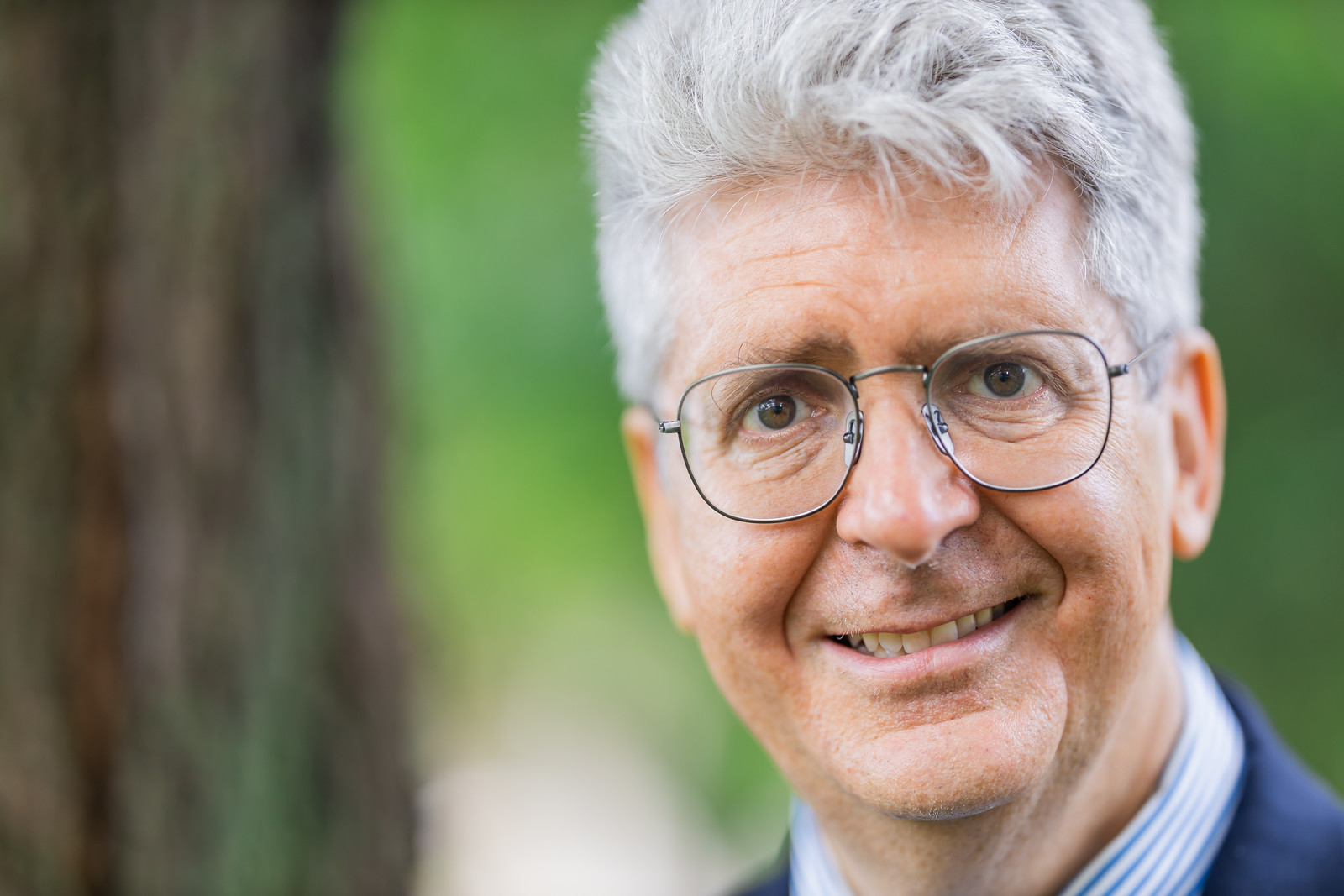
Long Bio
Fernando M. Reimers is the Ford Foundation Professor of Practice in International Education and Director of the Global Education Innovation Initiative and of the International Education Policy Program at Harvard University. His research and teaching focus on the contribution of education policy and innovation to the development of 21st century skills. His course ‘Education Policy Analysis and Research in Comparative Perspective’ examines policy options to address some of the core global education challenges. His course ‘Educational Innovation and Social Entrepreneurship in Comparative Perspective’ examines the role of entrepreneurs and of public private partnerships leading educational innovations that empower students.
As co-chair of Harvard’s Advanced Leadership Initiative, he leads an Education Think Tank which convenes global education leaders to discuss solutions to aligning education systems with the development of 21st century skills.
His current research focuses on the impact of education policies and programs in developing 21st century skills.
He is a member of the Massachusetts Board of Higher Education, where he chairs the task force to support alignment of institutional strategies of our public institutions of higher education with the Vision Project, Massachusetts compact to improve higher education. He serves as Vice-Chair of the board of LASPAU, a member of the Council of Foreign Relations, a Fellow of the International Academy of Education, a Member of the US Commission for UNESCO, and a member of the board of directors of Room to Read, Teach for All, World Teach and of Phalen Leadership Academies and of the Advisory Boards of Global Cities, Creative Associates and of Primary Source. In 2015 he was appointed to the steering committee of the Education in Conflict and Crisis group of the United States Agency for International Development and working with a task force of Ministers of Education of the Americas, supported the development of an education strategy to advance the Interamerican Education Agenda agreed at the last Summit of Presidents of the Americas convened by the Organization of American States.
Prior to joining the Faculty at the Graduate School of Education he worked at the World Bank, at the Harvard Institute for International Development and on the faculty at Universidad Central de Venezuela. He has extensive experience in the area of international development assistance with the United States Agency for International Development, the World Bank, the Inter American Development Bank and other Development Organizations. He has worked in Australia, Brazil, China, Colombia, Egypt, El Salvador, India, Indonesia, Jordan, Mexico, Pakistan, Paraguay, Peru, Singapore and Venezuela, among others.
From 2005 to 2008 he co-chaired the Global Education Advisory Board to the Massachusetts Commissioner of Education and served on the Governor appointed task force on Curriculum Realignment and 21st century skills. In 2009-2010 he served on a committee appointed by the Massachusetts Board of Education to formulate recommendations to close the achivement gap for English Language Learners. He chairs a strategy subcommittee of the Massachusetts Board of Higher Education to support the alignment of institutional strategies of the States public universities with the Vision Project, a Statewide framework to advance excellence and equity in higher education.
At Harvard he serves on the boards of the Harvard Foundation, the David Rockefeller for Latin American Studies, and the the South Asia Initiative. He is a Faculty Associate at the Center for International Development, John F. Kennedy School of Government, and a Faculty Associate at the Weatherhead Center for International Affairs. He serves on the University Committees on International Projects and Sites, of Academic Computing and on the Research Committee of HarvardX.
In 2009 he received an honorary degree from Emerson College for his work promoting human rights and the right to education around the world. In 2015, he received the CJ Koh Professorship from Singapore's National Institute of Education.
Fernando M. Reimers
Fernando M. Reimers is the Ford Foundation Professor of the Practice of International Education and Director of the Global Education Innovation Initiative and of the International Education Policy Masters Program at Harvard University.
Professor Reimers is an expert in the field of Global Education. His research and teaching focus on understanding how to educate children and youth so they can thrive in the 21st century. He studies how education policy and leadership foster educational innovation and quality improvement. As part of the work of the Global Education Innovation Initiative he leads, he and his colleagues conducted a comparative study of the goals of education as reflected in the curriculum in Chile, China, India, Mexico, Singapore and the United States, published as Teaching and Learning for the 21st Century by Harvard Education Press, a book which has also been published in Chinese, Portuguese and Spanish. Another book, Preparing Students to Educate Whole Students, presents the results of a comparative study of programs around the world which support teachers in developing the professional competencies to teach holistically for the 21st Century. The book Learning to Improve the World: How Injaz Al-Arab helps youth in the Middle East develop an entrepreneurial mindset, presents the findings of an experimental evaluation of an entrepreneurship educationn program on the mindset and skills of secondary school students in six countries in the Middle East. The book Formar Lectores y Ciudadanos. Desafios de la Escuela en America Latina examines the relationship between the development of literacy skills and the capacity for civic engagement in Latin America.
Three recent books present innovative global citizenship curricula. Empowering Global Citizens a complete K-12 curriculum of global citizenship education, examines why global citizenship education, aligned with helping students advance human rights and contribute to the achievement of the Sustainable Development Goals is an imperative of our times. Empowering Students to Improve the World in Sixty Lessons. Version 1.0, presents a strategic framework and protocols to help teachers and school leaders develop strategies and curriculum for global citizenship education. Learning to Collaborate for the Global Common Good examines the challenges to democracy and democratic education emerging from rising intolerant movements around the world, and presents various curriculum resources to educate students to understand and advance Human Rights and the Sustainable Development Goals.
Two recently edited books compile the results of informed dialogues, designed to foster collective impact in the areas of teacher education in Massachusetts (Fifteen Letters on Education in Singapore) and in the area of Scaling 21st century education programs (Empowering All Students at Scale).
His recent book One Student at a Time. Leading the Global Education Movement, is an analysis of the leadership challenges faced by those advancing global efforts to equip students with essential competencies to our times.
He recently chaired a Global Alliance which produced a framework for collective impact in strengthening teacher preparation and support (Connecting the Dots to build the future teaching and learning). This report has been translated and published in Arabic, Portuguese and Spanish and used to steer national dialogues on how to create conditions to strengthen the teaching profession and improve the relevance of instruction.
Professor Reimers has worked to advance the contributions of colleges and universities to develop leadership that advances cosmopolitanism, democracy and economic and social innovation. He has led the development of several innovative programs at Harvard University, including the masters degree program in International Education Policy and various executive education programs, including a program to support education leaders working for UNICEF and a collaboration with the Universidad de Juiz de For a in Minas Gerais, Brazil, to develop a masters degree program in education leadership. He is a founding co-chair of the Advanced Leadership Initiative, a program which brings to the university outstanding individuals who have retired from a primary career and who are interested in devoting themselves to addressing significant social challenges. As chair of the Strategic Planning Committee of the Massachusetts Board of Higher Education he works with all public institutions of higher education in the State developing institutional strategies to enhance the relevance of their programs. He has advised a range of institutions of higher education on strategies to advance the global awareness of undergraduates and serves on the board of Laspau, a Harvard affiliated organization whose mission is to strengthen institutions of higher education in Latin America.
He has advanced the development of programs to provide students and recent college graduates opportunities to engage in service and to develop civic, global and leadership competencies through his service on the boards of numerous education organizations and foundations inclluding Teach for All, World Teach, the Global Scholars Program at Bloomberg Philanthropies, Envoys, and the scholars advisory council of Facing History and Ourselves.
In 2017 he received the Global Citizen Award from the Committee on Teaching about the United Nations for his work advancing global citizenship education. In 2015 he was appointed the C.J. Koh Visiting Professor of Education at the National Institute of Education in Singapore in recognition of his work in global education. He received an honorary doctorate from Emerson College for his work advancing human rights education. He is a fellow of the International Academy of Education and a member of the Council of Foreign Relations.