
Fernando M. Reimers
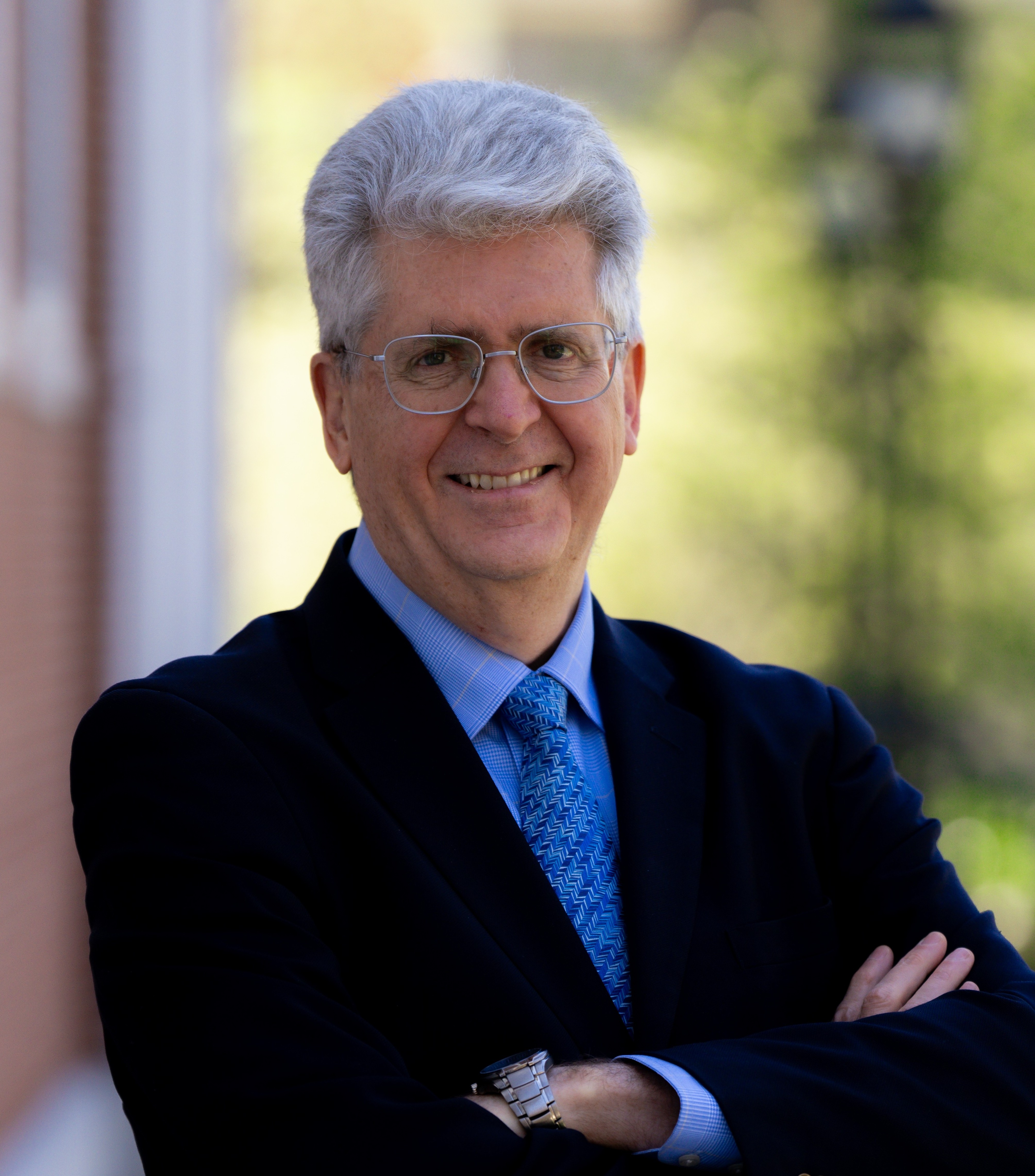
Fernando M. Reimers is the Ford Foundation Professor of the Practice in International Education at the Harvard Graduate School of Education and Director of the Global Education Innovation Initiative at Harvard University. His work examines how education systems can better prepare children and youth for civic and economic participation, and how curriculum, leadership, teacher professional development, and policy can support large-scale improvement aligned with the UN Sustainable Development Goals. His recent work also addresses the relationship between Education and Climate change, as discussed in the recent book Educating for a Climate Changed Future, and the role of artificial intelligence in transforming education systems, particularly in lower-resource contexts, including in Artificial Intelligence and Education in the Global South. A Systems Perspective. Reimers is an elected member of the United States National Academy of Education and the International Academy of Education, of which he was elected President in 2026. He is also a member of the Council on Foreign Relations. He served on UNESCO’s Commission on the Futures of Education, which produced Reimagining Our Futures Together: A New Social Contract for Education.
About Fernando M. Reimers
Fernando M. Reimers is a Venezuelan-born scholar and practitioner of international and comparative education based at Harvard University. He serves as the Ford Foundation Professor of the Practice in International Education at the Harvard Graduate School of Education (HGSE) and as Director of the Global Education Innovation Initiative (GEII), a cross-country research and practice collaborative focused on education for the twenty-first century.
Reimers’ central interest is advancing understanding of the ways schools can empower students to participate civically and economically, expand opportunity, and contribute to more inclusive, sustainable societies. He is currently studying the relationship between education and climate change. A defining feature of his work is connecting these educational aims to global challenges—such as climate change, inequality, and threats to democracy—and to the UN Sustainable Development Goals (SDGs). More recently, he has focused on the implications of artificial intelligence for curriculum, instruction, assessment, teacher learning, leadership, and education system governance—particularly in the Global South—work reflected in Artificial Intelligence and Education in the Global South: A Systems Perspective.
Reimers is an elected member of the United States National Academy of Education and of the International Academy of Education, and a member of the Council on Foreign Relations. He served on UNESCO’s Commission on the Futures of Education, which authored Reimagining Our Futures Together: A New Social Contract for Education. He has also served on the U.S. National Commission for UNESCO.
Teaching and academic leadership
Reimers teaches courses in comparative education policy, climate change and education and educational innovation. His teaching explores how education systems can support students in developing the competencies that improve their quality of life and opportunities, while also strengthening their capacity to contribute to the common good.
At HGSE, he co-leads:
- the Global, International, and Comparative Education concentration, and
- the International Education Policy and Management pathway (online master’s program).
He was the founding director of HGSE’s International Education Policy master’s program, created to prepare leaders of systemic efforts to enhance the quality and relevance of education around the world. His book One Student at a Time: Leading the Global Education Movement analyzes the contributions of graduates of that program to the broader global education movement (also available in Spanish). His work on leadership and educational continuity during COVID-19 includes books and edited volumes that examine how education leaders and systems sustained educational opportunity during the pandemic.
A hallmark of his pedagogy is project-based policy analysis and client-engaged learning, in which students consult for real organizations and education systems, producing work that is often refined into publications. He also develops approaches that incorporate AI-enhanced teaching and learning, including flipped classroom models.
Research and current work
Reimers’ research focuses on educational innovation and on the impact of education policy, curriculum, leadership, teacher professional development, the relationship between education and climate change, and artificial intelligence on education systems—especially as these factors relate to the holistic development of children and youth.
Through GEII, he has led comparative, cross-national research and publication programs on:
- system-level reforms to educate the “whole child,”
- global citizenship education and SDG-aligned curriculum,
- education and climate change, and
- education system responses to crisis (including COVID-19).
During the COVID-19 pandemic, he led and edited multiple comparative studies of educational continuity and system adaptation, including:
- Primary and Secondary Education During COVID-19 (comparative analyses of system responses),
- Schools and Society During the COVID-19 Pandemic (medium-term impacts on system priorities and functioning), and
- University and School Collaborations During a Pandemic (how universities partnered with schools across countries to sustain opportunity).
He also collaborated with partners at the OECD, the World Bank, and others to develop case studies of educational innovation during the pandemic and frameworks to support education decision-making during disruption, including the OECD report A Framework to Guide an Education Response to the COVID-19 Pandemic of 2020 (with Andreas Schleicher). More information about his current work and interests is available at FernandoMReimers.com
Publications (selected highlights)
Reimers’ work is available through academic publishers and widely used practitioner channels; it can also be found on ResearchGate, Academia.edu, Google Scholar, and other platforms.
Recent and representative books include:
Reimers, F. and Wang-Aghania, M. Education for a Climate Changed Future. Springer, 2026.
Reimers, F., Azim, Z., Palomo, M.R. and Callysta, T. Artificial Intelligence and Education in the Global South: A Systems Perspective. Springer, 2025.
Reimers, F. Educating Students to Improve the World. Springer, 2020.
Reimers, F. The Quest for Educational Equity in Mexico. Daedalus, 2024.
Reimers, F. Educating Students for Climate Action. Distraction or Higher Education Capital? Daedalus, 2024.
Reimers, F. Entrepreneurship Education to Improve the World: The Role of the Sustainable Development Goals to Stimulate Innovation in Higher Education. Entrepreneurship Education, 2024.
Reimers, F. The Sustainable Development Goals and Education. International Journal of Educational Development, 2024.
Reimers, F. Education Purposes for a Sustainable Future. Prospects, 2023.
Reimers, F. Education and the Challenges for Democracy. Education Policy Analysis Archives, 2023.
Reimers, F. (Ed.) Schools and Society During the COVID-19 Pandemic. Springer, 2023.
Reimers, F. (Ed.) Primary and Secondary Education during COVID-19. Springer, 2022.
Reimers, F. (Ed.) Implementing Deeper Learning and Twenty-First Century Reforms. Springer, 2021.
Reimers, F. (Ed.) Education and Climate Change. The Role of Universities. Springer, 2021.
Reimers, F. (Ed.) Audacious Education Purposes. Springer, 2020.
Reimers, F. (Ed.) Empowering Teachers to Build a Better World. Springer, 2020.
He has also written children’s books designed to foster intergenerational conversations about the values and competencies needed to live well with others in a diverse and interdependent world, as well as books that cultivate appreciation for the natural world.
Service, advising, and collaboration
He has advised governments, international development organizations, foundations and universities on education policy and strategy across Latin America, North America, the Middle East, Africa, Asia, and Europe. His advisory experience includes work with UNESCO, OECD, UNICEF, UNDP, USAID, the World Bank, the Inter-American Development Bank, the Organization of American States, the Organization of Ibero-American States, other international institutions, universities, foundations and other education organizations.
Reimers serves in a wide range of academic, policy, and civic roles. He is a Fellow and elected president of the International Academy of Education, a Member of the National Academy of Education, and a Member of the Council on Foreign Relations. He is a member of the Governing Board of UNESCO’s International Institute for Educational Planning and on the advisory board of the Organization of Iberoamerican Sates. He was a member of UNESCO’s Commission on the Futures of Education, which co-authored Reimagining Our Futures Together: A New Social Contract for Education. He chaired the strategic planning committee of the Massachusetts Board of Higher Education, where he served for a decade. He serves on the boards or advisory boards of numerous education organizations.
Honors
Reimers’ recognitions include an honorary doctorate in Humane Letters from Emerson College, the CJ Koh Visiting Professorship at Singapore’s National Institute of Education, the Global Citizenship Award from the Committee for Teaching About the United Nations, and the Institute of International Education’s Centennial Medal. In 2025, he received the Enrique Anderson-Imbert Award from the North American Academy of the Spanish Language. His doctoral dissertation at Harvard, examining the impact of the external debt on education financing in Latin America was published by UNESCO. He graduated Magna Cum Laude from the Department of Psychology at the Universidad Central de Venezuela, where his undergraduate thesis examining approaches to personalized learning was approved with honors and recommended for publication, and where he began his career teaching experimental psychology and conducting experiments to develop the creativity of preschool children.
Connect
- Twitter/X: FernandoReimers
LinkedIn: fernando-reimers